Imagine a world where machines can “see” and interpret the world around them just like humans do. This isn’t science fiction; it’s the reality of computer vision, a rapidly evolving field with applications transforming industries from healthcare to autonomous vehicles. This comprehensive guide will delve into the intricacies of computer vision, exploring its fundamental concepts, practical applications, and future trends.
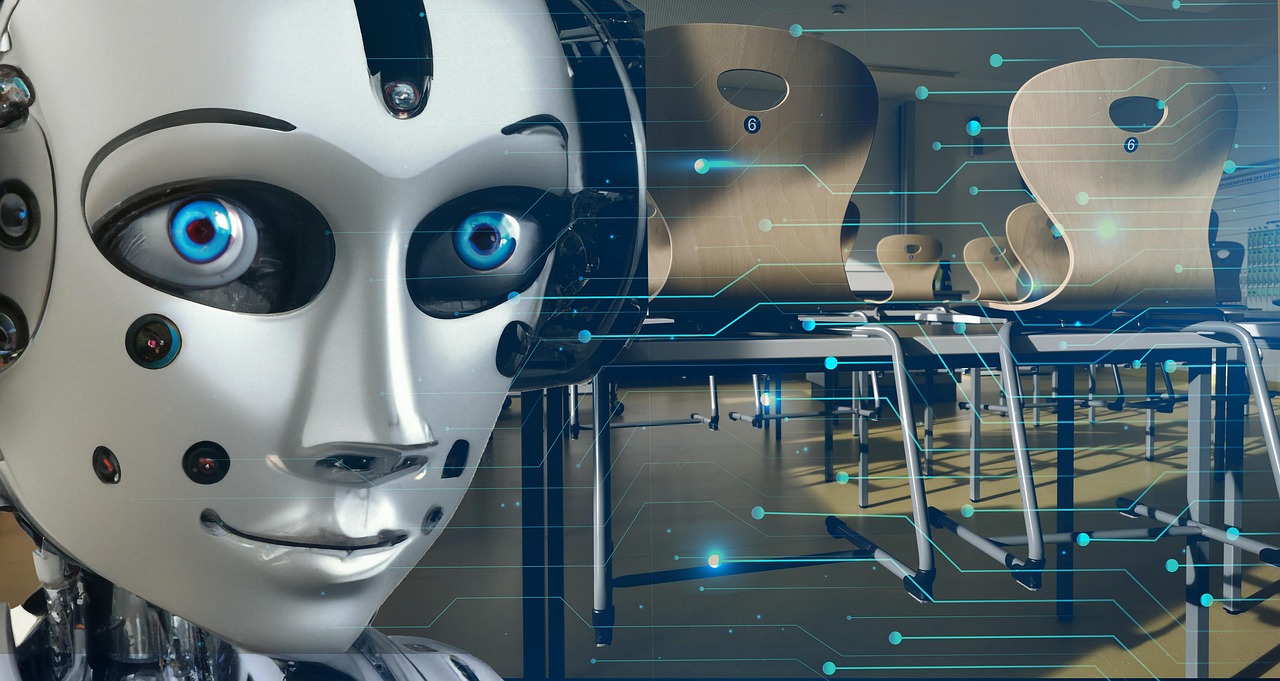
What is Computer Vision?
Defining Computer Vision
Computer vision is a field of artificial intelligence (AI) that enables computers and systems to extract meaningful information from Digital images, videos, and other visual inputs—and then take actions or make recommendations based on that information. Essentially, it aims to automate tasks that the human visual system can do.
- Core Function: To understand and interpret visual data in a way that mirrors human vision.
- Difference from Image Processing: While image processing focuses on manipulating images to enhance them, computer vision aims to understand and derive meaning from them.
Key Components of Computer Vision
Computer vision relies on several key components working in tandem:
- Image Acquisition: The process of capturing visual data through sensors like cameras.
- Image Preprocessing: Enhancing image quality and reducing noise for better analysis. This includes techniques like:
Resizing
Grayscale conversion
Noise reduction (e.g., using Gaussian blur)
- Feature Extraction: Identifying and extracting relevant features from the image, such as edges, corners, and textures. Algorithms like SIFT (Scale-Invariant Feature Transform) and SURF (Speeded-Up Robust Features) are commonly used.
- Object Detection & Recognition: Identifying and classifying objects within the image. This often involves using trained machine learning models.
- Image Segmentation: Dividing an image into multiple segments or regions, often based on color, texture, or other characteristics. Useful for isolating objects of interest.
- Machine Learning: Training models to learn patterns and make predictions based on visual data. Deep learning, particularly convolutional neural networks (CNNs), has revolutionized computer vision.
How Computer Vision Works: A Deeper Dive
Image Representation and Feature Extraction
Understanding how images are represented digitally is crucial. Images are essentially matrices of pixels, each containing color information (e.g., RGB values). Computer vision algorithms analyze these pixel values to extract meaningful features.
- Edge Detection: Identifying boundaries between objects or regions using techniques like the Sobel or Canny edge detectors. This highlights sudden changes in pixel intensity.
- Corner Detection: Locating corners in an image using algorithms like the Harris corner detector. Corners are often useful for object tracking and matching.
- Texture Analysis: Analyzing the spatial arrangement of pixel intensities to identify different textures. Gabor filters are often used for this purpose.
Machine Learning Models for Computer Vision
Machine learning, especially deep learning, plays a pivotal role in modern computer vision. Convolutional Neural Networks (CNNs) are particularly effective.
- Convolutional Neural Networks (CNNs): These networks are designed to automatically and adaptively learn spatial hierarchies of features from images. They consist of layers like:
Convolutional Layers: Extract features by applying filters to the input image.
Pooling Layers: Reduce the spatial dimensions of the feature maps, reducing computational cost and making the model more robust to variations.
Fully Connected Layers: Classify the features extracted by the convolutional and pooling layers.
- Training Process: CNNs are trained using large datasets of labeled images. The network learns to adjust its internal parameters to minimize the difference between its predictions and the ground truth labels.
- Transfer Learning: Using pre-trained models (e.g., trained on ImageNet) and fine-tuning them for specific tasks. This can significantly reduce training time and improve performance, especially when dealing with limited data.
Popular Computer Vision Libraries and Frameworks
Several open-source libraries and frameworks simplify the development of computer vision applications:
- OpenCV (Open Source Computer Vision Library): A comprehensive library providing a wide range of functions for image processing, object detection, and video analysis.
- TensorFlow: A powerful deep learning framework developed by Google, widely used for building and training CNNs and other machine learning models.
- PyTorch: Another popular deep learning framework known for its flexibility and ease of use.
- Keras: A high-level API that simplifies the development of deep learning models, often used with TensorFlow or PyTorch as a backend.
Applications of Computer Vision Across Industries
Healthcare
Computer vision is revolutionizing healthcare by enabling more accurate and efficient diagnoses.
- Medical Image Analysis: Analyzing X-rays, CT scans, and MRIs to detect diseases like cancer, Alzheimer’s, and cardiovascular diseases.
- Diagnosis Support: Assisting doctors in identifying anomalies and making more informed diagnoses. For example, detecting tumors in radiology images with higher accuracy than a human expert.
- Surgical Assistance: Providing real-time guidance during surgery using augmented reality overlays based on computer vision analysis of the surgical field.
Autonomous Vehicles
Computer vision is a core Technology enabling self-driving cars to perceive their surroundings.
- Object Detection: Identifying and classifying objects like pedestrians, vehicles, traffic signs, and lane markings.
- Lane Detection: Identifying lane boundaries to keep the vehicle within its lane.
- Obstacle Avoidance: Detecting and avoiding obstacles in the vehicle’s path.
- Examples: Tesla’s Autopilot system heavily relies on computer vision for object detection and lane keeping. Waymo’s self-driving technology utilizes computer vision to create a detailed 3D map of its surroundings.
Manufacturing
Computer vision improves quality control and efficiency in manufacturing processes.
- Quality Inspection: Identifying defects in products on assembly lines. Cameras can detect scratches, dents, or other imperfections.
- Automated Assembly: Guiding robots in assembling complex products.
- Predictive Maintenance: Analyzing images of machinery to detect early signs of wear and tear, enabling proactive maintenance.
Retail
Computer vision enhances the customer experience and improves operations in retail environments.
- Inventory Management: Automatically tracking inventory levels on shelves. Cameras can scan shelves and identify out-of-stock items.
- Customer Behavior Analysis: Analyzing customer movements and interactions within the store to optimize store layout and product placement.
- Checkout Automation: Enabling cashier-less checkout systems, such as Amazon Go stores, using computer vision to identify the items customers take.
Challenges and Future Trends in Computer Vision
Current Challenges
Despite its advancements, computer vision faces several challenges:
- Data Bias: Models trained on biased datasets can exhibit discriminatory behavior. For instance, a facial recognition system trained primarily on images of one race may perform poorly on images of other races.
- Adversarial Attacks: Intentionally crafted images can fool computer vision models.
- Computational Cost: Training and deploying complex computer vision models can be computationally expensive.
- Real-time Processing: Achieving real-time performance with complex models on resource-constrained devices.
Future Trends
The future of computer vision is bright, with several emerging trends:
- Edge Computing: Performing computer vision tasks on edge devices (e.g., smartphones, drones) to reduce latency and improve privacy.
- Explainable AI (XAI): Developing techniques to understand why a computer vision model made a particular prediction.
- 3D Computer Vision: Extending computer vision to analyze and understand 3D scenes.
- AI-Powered Video Analytics: Real-time analysis of video streams to detect and classify objects, track movement, and identify anomalous behavior. Expected to see significant growth in the security and surveillance industries.
Conclusion
Computer vision is a transformative technology with the potential to reshape numerous industries. From enhancing medical diagnoses to enabling autonomous vehicles and revolutionizing retail experiences, its applications are vast and growing. While challenges remain, ongoing research and development are continuously pushing the boundaries of what’s possible, paving the way for an even more intelligent and visually aware future. Keeping abreast of these developments and exploring the possibilities for integration into various workflows is crucial for businesses looking to stay ahead of the curve.
Read our previous article: Beyond Bitcoin: Diversifying For Crypto Portfolio Resilience
Visit Our Main Page https://thesportsocean.com/